
Overview
Salesforce CTI Toolbar deals with Supervisor Features like Team Performance and Queue Stats as well.
Supervisor's Interface Login View
If the user has a role assigned Supervisor then for such a user there are some additional functionalities provided in the solution. The controls of a supervisor are described below:
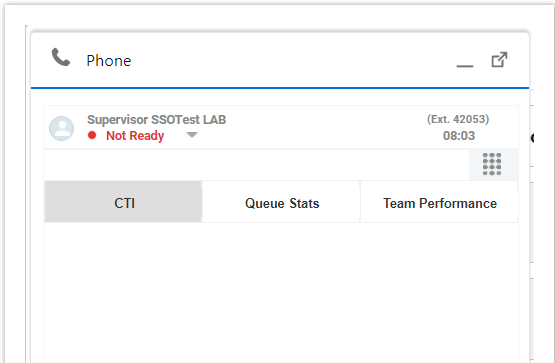
Default View of Supervisor Login
Team Performance
Team Performance control basically provides a view where all teams and agents associated with the respective teams are shown. If the supervisor clicks on the Team Performance tab, then the supervisor will be able to view the team, agents, and all other features related and can perform the following actions:
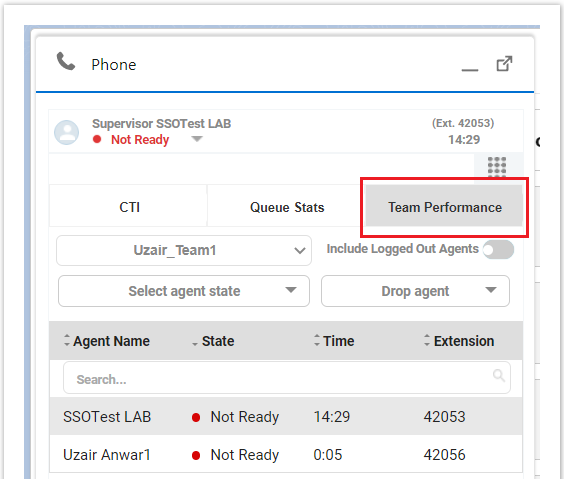
Team Performance
s
View Logged Out Agents
The supervisor can also see logged-out agents for the team on activating the toggle button of 'Include Logged Out Agents'
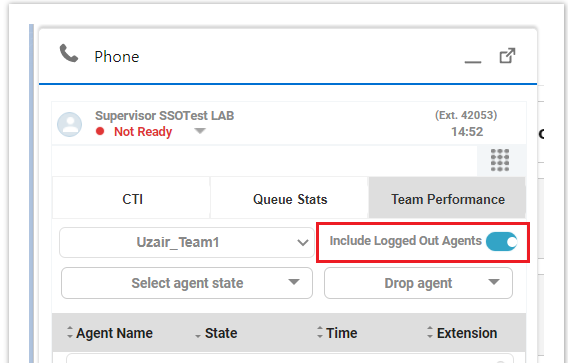
Include Logged Out Agents
Change the State of the Team Agents
The supervisor can change the state of the team agents by selecting a particular agent.
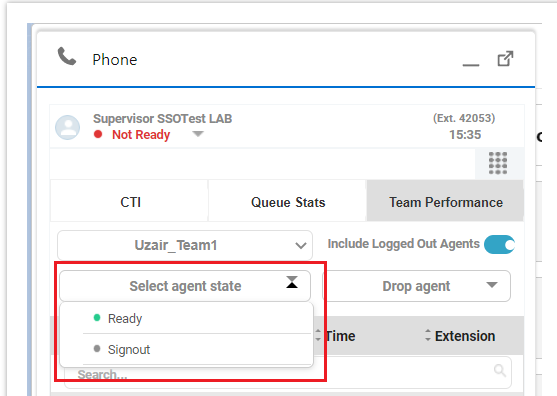
Change the state of the Team Agents
Change the Teams
The supervisor can change the teams from the teams dropdown as shown on the right
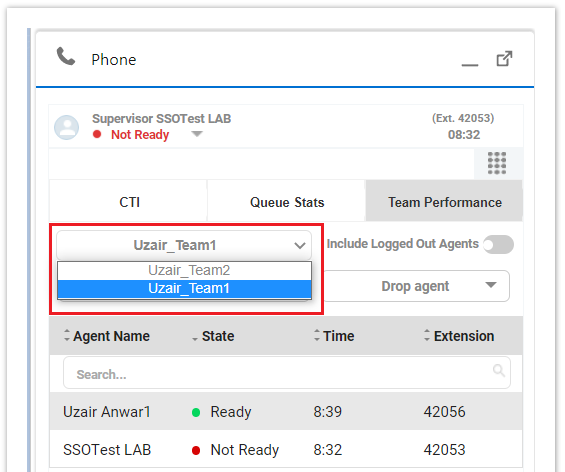
Change the Teams
Silent Monitoring
If the selected agent is in a Talking State and the supervisor has a Not Ready state and has no ongoing call, then the supervisor can perform Silent Monitoring for that agent. In silent monitoring, the supervisor becomes a participant in the call but the agent and customer are not aware that the supervisor is part of the call.
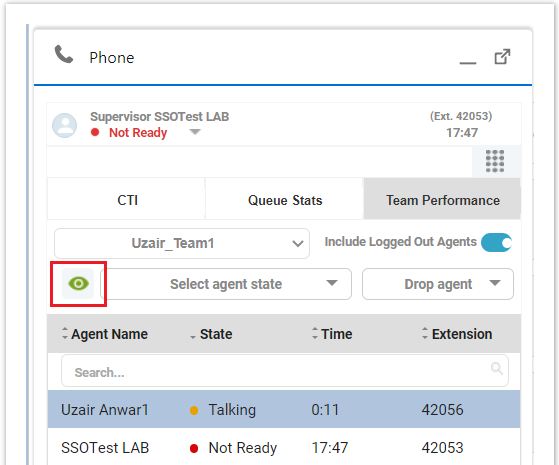
Silent Monitoring
Barge in
Once the supervisor has started silent monitoring, then the supervisor has the option to barge in (conference) in the call between the customer and agent.
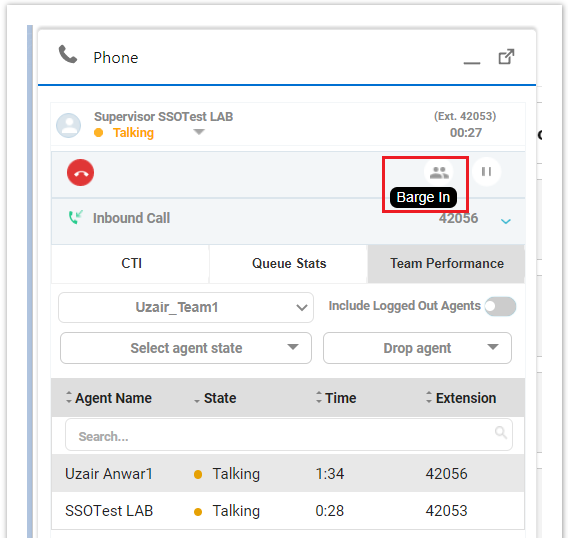
Barge in
Drop the Agent
Once the supervisor has initiated barge-in, the supervisor can also drop the agent.
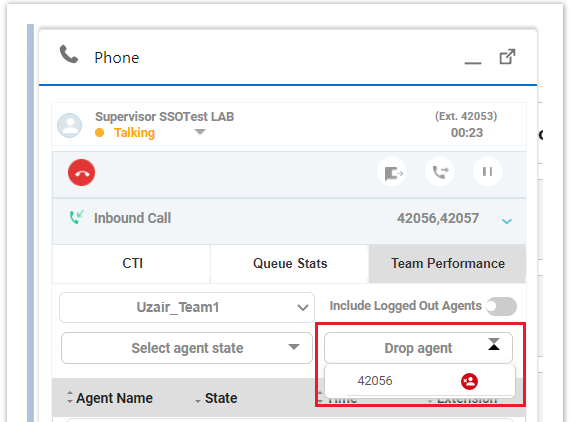
Drop the Agent
Queue Stats
If the supervisor chooses the Queue Stats tab, then the information related to the queue assigned to the supervisor would be visible. The user can sort the data provided in the table for any column by selecting the sorting arrows provided adjacent to each column name. By default, however, it is sorted on queue name.
Following are the columns of the Queue Statistics gadget
|
Fields |
Description |
|---|---|
|
Queue Name |
The name of the queue |
|
Busy |
The number of inbound calls & outbound calls that are dialed via the extension (not queue DN) |
|
Logged In |
The number of agents that are logged in |
|
Number of Calls |
The number of calls waiting in the queue |
|
Max Time |
The length of time the oldest call has been in the queue |
|
Ready |
The number of agents assigned to the queue who are in the Ready state |
|
Not Ready |
The number of agents assigned to the queue who are in the Not Ready state |
|
Active |
|
|
Wrap Up |
|
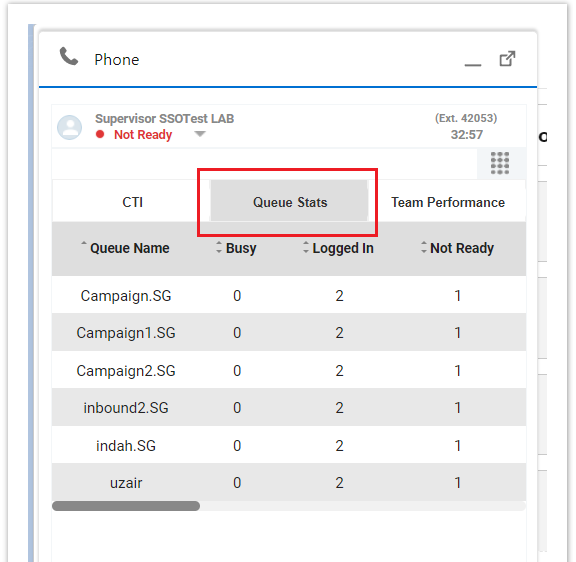
Queue Statistics
-
Finesse does not compute the queue statistics but instead receives the queue statistics from Unified CCE.
-
Finesse does not display the queue statistics for the default queue (default skill group on Unified CCE).
-
The Active Out statistic includes agents talking on outbound calls placed by those agents. It also includes non-routed calls placed to external devices that are not monitored by Unified CM and to devices in a different Unified CM cluster. It does not include agents on Outbound Option calls.
-
If an agent places a direct call to another agent's extension, Unified CCE increments the Active Out statistic for the default queue (skill group). However, because Finesse does not display the queue statistics for the default queue, the Active Out statistics do not change for any of the Finesse queues to which the agent is assigned.